
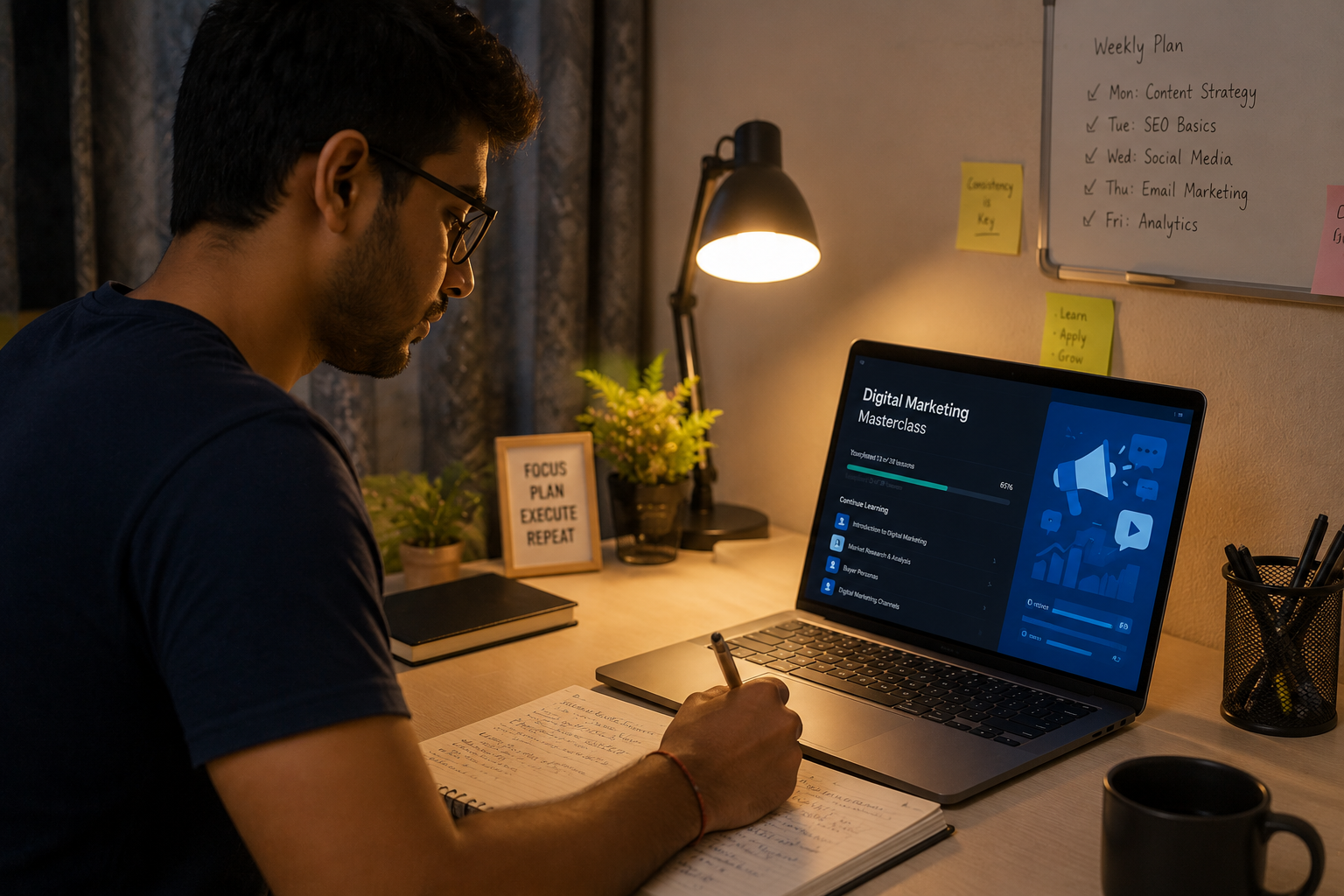
How to Switch Your Career to Digital Marketing (Even If You're Not Happy With Your Current Job)
At some point, most people sitting in a job they don’t love start Googling the same thing at 11 PM: “how to switch career to digital marketing.” Maybe the pay has plateaued. The role might feel pointless, day after day. Or the company promoted someone younger than you right past your desk. Whatever brought you here, you’re not alone, and switching is more doable than it probably feels right now.
Here’s what an actual career switch to digital marketing looks like in 2026 — not the sugarcoated version, the real one.
Why so many people are making this switch right now
Traditional jobs in sales, operations, teaching, even IT support, often come with a ceiling. Digital marketing doesn’t really have one in the same way. Businesses of every size — from a local gym to a national e-commerce brand — need someone who can run their online presence. That demand isn’t slowing down, and it’s created room for people from completely unrelated backgrounds to walk in and build a second career.
You don’t need a marketing degree to start
This is the part people find hardest to believe. Some of the best performers in this field started as engineers, teachers, bank employees, even mechanics. What actually matters is whether you can learn SEO, run ad campaigns, understand data, and write content that gets people to act. None of that requires a business degree — it requires the right training and consistent practice.
What the switch actually involves
Learning the skills that matter, not everything at once
You don’t need to master ten things before you start applying for jobs. Focus on core skills first — SEO, social media marketing, Google Ads, and basic analytics. Once you’re comfortable there, you can branch into content strategy or automation. Trying to learn everything at once is usually what makes people quit halfway.
Building something you can actually show
A certificate alone won’t convince a hiring manager to call you back. What gets attention is proof — a small business’s Instagram page you grew, a mock ad campaign you built, a blog you optimized and ranked. Even one solid project changes how a hiring manager reads your resume, especially when you’re coming from an unrelated field.
Managing the money question while you’re transitioning
This is usually the biggest fear, and it’s a fair one. You don’t have to quit your current job the day you start learning. Most people run both in parallel — working during the day, building marketing skills and small projects in the evenings — until they’re ready to make the jump with an offer in hand, not a hope.
Getting past the “no experience” wall
Every switcher hits this. Recruiters ask for experience, and you don’t have any yet — at least not in marketing. The way around it is internships, freelance gigs, or even managing a friend’s small business page for free in the beginning. It’s not glamorous, but it’s what turns “I took a course” into “I’ve actually done this.”
A few honest signs you’re ready to make the move
Ask yourself where you actually stand. Have you built at least one real project outside of coursework? Can you explain, in your own words, why a campaign worked or didn’t? Do you have some savings or a plan to manage a possible pay dip in your first few months? If you’re nodding through most of that, you’re closer to ready than you probably think.
Where to actually start
The fastest way to move from “thinking about it” to “doing it” is structured, practical training — not just YouTube videos in random order. A good course gives you the fundamentals, hands-on projects, and enough direction that you’re not guessing what to learn next.
How All India Media Solutions Can Help
Based in Sector 14, Gurugram, All India Media Solutions runs project-based digital marketing training built specifically for career switchers — people coming from sales, teaching, IT, and other unrelated fields who want a real, employable skill set, not just theory. You’ll work on live projects, not just slides, and get guidance on building the portfolio that actually gets you hired.
If you’re serious about making the switch, talk to our team about the next batch.